Penguin Modern Classics
1289 books in this series
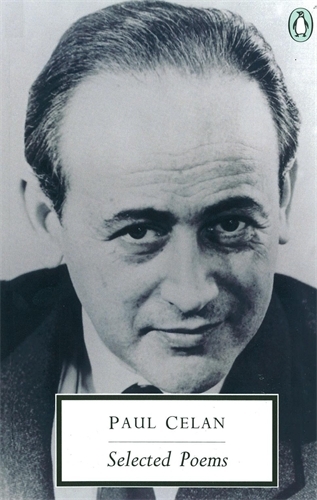
Selected Poems
One of the major twentieth-century European poets, Paul Celan wrote poetry of exceptional linguistic brilliance and intensity drawn from his experiences, particularly of the war years and the loss of his parents in the death camps. In his verse he sought to express 'not only what the experience felt like, but also a sense of living, with comprehension, inside the experience'. WINNER OF THE FIRST EUROPEAN TRANSLATION PRIZE
Six Characters in Search of an Author and Other Plays
Pirandello (1867-1936) is the founding architect of twentieth-century drama, brilliantly innovatory in his forms and themes, and in the combined energy, imagination and visual colours of his theatre.This volume of plays, translated from the Italian by Mark Musa, opens with Six Characters in Search of an Author, Pirandello's most popular and controversial work in which six characters invade the stage and demand to be included in the play. The tragedy Henry IV dramatizes the lucid madness of a man who may be King. In So It Is (If You Think So) the townspeople exercise a morbid curiosity attempting to discover 'the truth' about the Ponza family. Each of these plays can lay claim to being Pirandello's masterpiece, and in exploring the nature of human personality each one stretches the resources of drama to their limits.
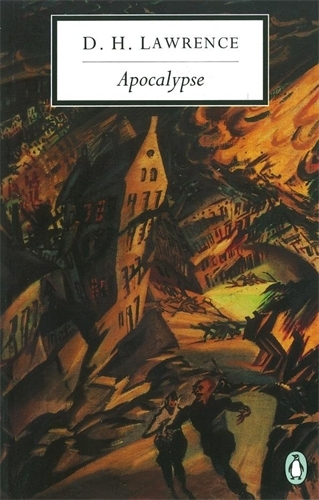
Apocalypse
Written during the winter of 1929-30 and his last major work, Apocalypse is Lawrence's radical criticism of the political, religious and social structures that have shaped Western civilization. In his view the perpetual conflict within man, in which emotion, instinct and the senses vie with the intellect and reason, has resulted in society's increasing alienation from the natural world. Yet Lawrence's belief in humanity's power to regain the imaginative and spiritual values which alone can revitalize our world also makes Apocalypse a powerful statement of hope. Presenting his thoughts on psychology, science, politics, art, God and man, and including a fierce protest against Christianity, Apocalypse is Lawrence's last testament, his final attempt to convey his vision of man and of the cosmos.
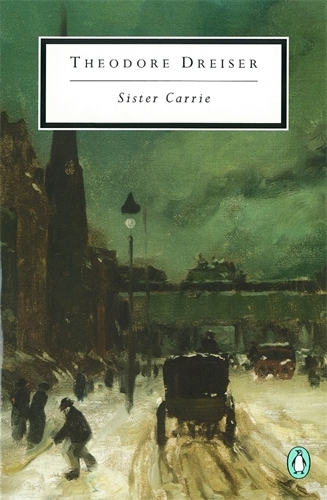
Sister Carrie
A landmark in American literature, presented in its complete and unexpurgated version. Dreiser's unsparing story of a country girl's rise to riches as the mistress of a wealthy man marked the beginning of the naturalist movement in America. Both its subject matter and Dreiser's objective, nonmoralizing approach made it highly controversial, and only a heavily edited version could be published in 1900. In this restored version, the truly revolutionary nature of Sister Carrie is made fully evident.
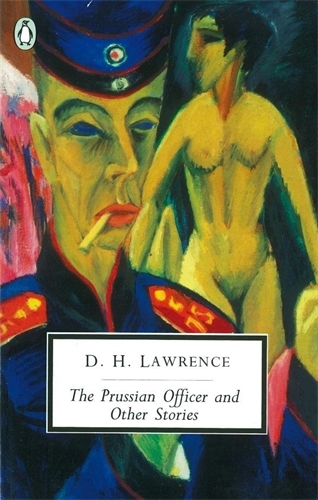
The Prussian Officer and Other Stories
His first published collection, these twelve stories were written between 1907 and 1914, during a crucial period of development for Lawrence from which he emerged a leading figure of the modernist movement. Reaching new levels of feeling and experience, these stories range from the tale of a Prussian officer who drives his orderly towards a bloody reckoning, to the strangely exotic elements of 'A Fragment of Stained Glass', and the divisions within society and conflicts of the heart that form the central themes of 'Daughters of a Vicar'. Interweaving individual lives, their happiness, failures and defeats, with the prfound forces of nature, Lawrence has created stories of remarkable power and sensitivity. This Penguin edition reproduces the newly established Cambridge text, which is based on Lawrence's manuscripts, typescripts and corrected proofs.
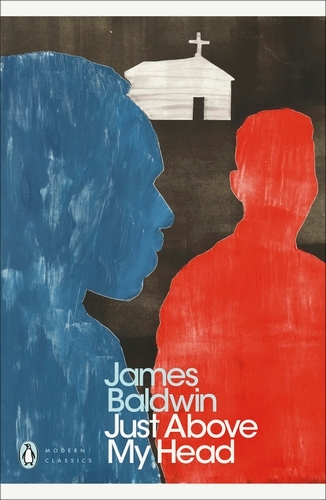
Just Above My Head
This is the fictional story of the great gospel singer Arthur Montana. Arthur was found dead in the basement of a London pub at the age of thirty-nine, yet he lies on in this memoir. Written by Hall, his brother and manager, it is in part a subtle and moving study of the treacherous ebb and flow of memory.
Set against a vividly drawn background of the civil rights movement of the sixties, Just Above My Head explores how Arthur discovers his love for Jimmy - 'with his smile like a lantern and a voice like Saturday nights' - and portrays how profoundly racial politics can shape the private business of love.
Set against a vividly drawn background of the civil rights movement of the sixties, Just Above My Head explores how Arthur discovers his love for Jimmy - 'with his smile like a lantern and a voice like Saturday nights' - and portrays how profoundly racial politics can shape the private business of love.
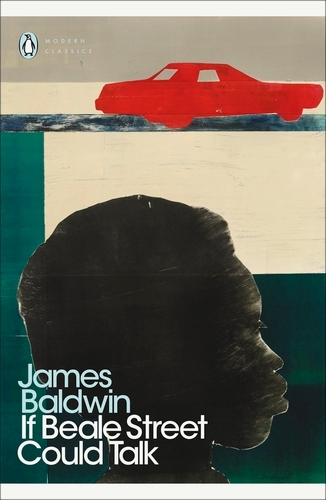
If Beale Street Could Talk
We are in Harlem, the black soul of New York City, in the era of Aretha Franklin and Ray Charles. The narrator of Baldwin's novel is Tish nineteen, and pregnant. Her lover Fonny, father of her child, is in jail accused of rape. Flashbacks from their love affair are woven into the compelling struggle of two families to win justice for Fonny. To this love story James Baldwin brings a spare and impassioned intensity, charging it with universal resonance and power.
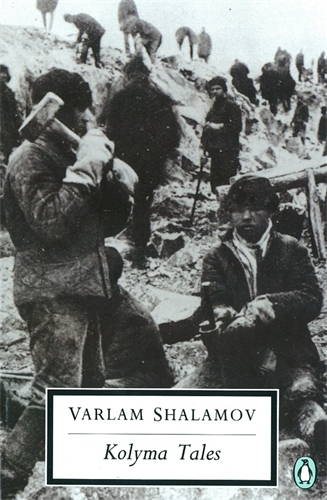
Kolyma Tales
It is estimated that some three million people died in the Soviet forced-labour camps of Kolyma, in the northeastern area of Siberia. Shalamov himself spent seventeen years there, and in these stories he vividly captures the lives of ordinary people caught up in terrible circumstances, whose hopes and plans extended to further than a few hours This new enlarged edition combines two collections previously published in the United States as Kolyma Tales and Graphite.
The Vendor of Sweets
While the colourful sweetmeats are frying in the kitchen, Jagan immerses himself in his copy of the Bhagavad Gita. A widower of firm Gandhian principles, Jagan nonetheless harbours a warm and embarrassed affection for his wastrel son Mali. Yet even Jagan's patience begins to fray when Mali descends on the sleepy city of Malgudi full of modern notions, with a new half-American wife and a grand plan for selling novel-writing machines. From different generations and different cultures, father and son are forced to confront each other, and are taken by surprise . . .
Writings on Irish Folklore, Legend and Myth
This collection brings together all of W. B. Yeats’s published prose writings on Irish folklore, legend and myth, with pieces on subjects including ghosts, kidnappers, fairies, ancient tribes, precious stones and Gaelic love songs. Through his researches on Irish folklore, Yeats attempted to create a movement in literature that was enriched by and rooted in a vital native tradition. In this volume Yeats’s essays, introductions and sketches are presented chronologically, giving a clear picture of how his analysis developed, increasing in its depth and complexity in his quest to create an Ireland of the imagination.
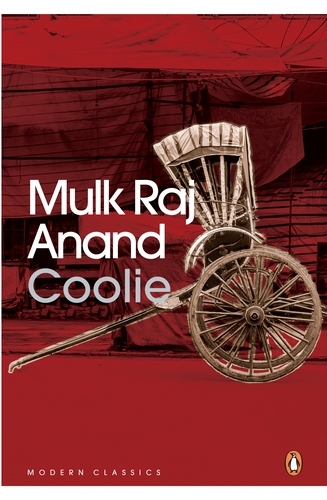
Coolie
Coolie portrays the picaresque adventures of Munoo, a young boy forced to leave his hill village to fend for himself and discover the world. His journey takes him far from home to towns and cities, to Bomboy and Simla, sweating as servant, factory-worker and rickshaw driver. It is a fight for survival that illuminates, with raw immediacy, the grim fate of the masses in pre-Partition India. Together with Untouchable, Coolie places Mulk Raj Anand among the twentieth century's finest Indian novelists writing in English.
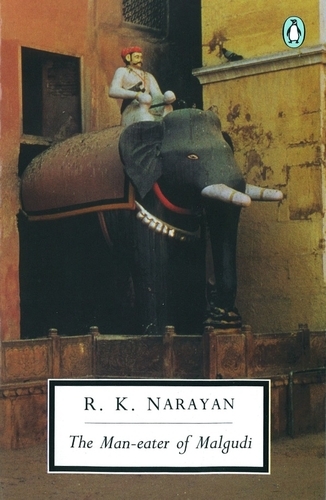
The Man-eater of Malgudi
This is the story of Nataraj, who earns his living as a printer in the little world of Malgudi, an imaginary town in South India. Nataraj and his close friends, a poet and a journalist, find their congenia l days disturbed when Vasu, a powerful taxidermist, moves in with his stuffed hyenas and pythons, and brings his dancing-women up the printer's private stairs. When Vasu, in search of larger game, threatens the life of a temple elephant that Natara j has befriended, complications ensue that are both laughable and tragic.
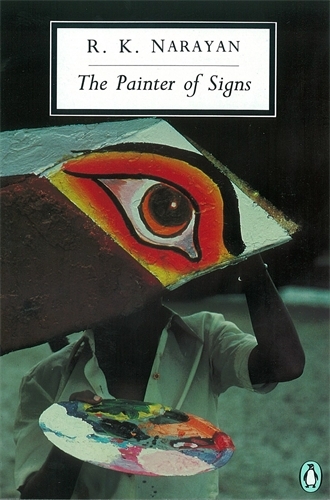
The Painter of Signs
In this wry, funny, bittersweet story, love gets in the way of progress when Raman, a sign painter, meets the thrillingly independent Daisy, who wishes to bring birth control to the city of Malgudi.
Winesburg, Ohio
Anderson profoundly changed the American short story, transforming it from light, popular entertainment into literature of the highest quality. His art belonged as much to an oral as a written tradition, and, as this collection shows, the best of his stories echo the language and the pace of a man talking to his friends. They explore with penetrating compassion the isolation of the individual and capture the emotional undercurrents hidden beneath ordinary events.

This Way for the Gas, Ladies and Gentlemen
Tadeusz Borowski’s concentration camp stories were based on his own experiences surviving Auschwitz and Dachau. In spare, brutal prose he describes a world where where the will to survive overrides compassion and prisoners eat, work and sleep a few yards from where others are murdered; where the difference between human beings is reduced to a second bowl of soup, an extra blanket or the luxury of a pair of shoes with thick soles; and where the line between normality and abnormality vanishes. Published in Poland after the Second World War, these stories constitute a masterwork of world literature.
Chance
'It is a mighty force that of mere chance, absolutely irresistible yet manifesting itself often in delicate forms such for instance as the charm, true or illusory, of a human being' In Flora de Barral, the slender, dreamy, morbidly charming daughter of a parvenu financier, Conrad creates his most complex heroine and one of his most unrelenting, but not unhopeful, novels of emotional isolation. Neglected by her bankrupt father and rejected by her governess, drifting into abstraction and despair, Flora takes refuge at sea on Captain Anthony's ship, where tragedy and her transformation begin. When published in 1913, Chance was an immediate success. Arnold Bennett wrote that 'this is a discouraging book for a writer because he damn well knows he can't write as well as this'; while an anonymous reviewer in Punch declared that 'the whole thing is much nearer wizardry than workmanship'.

Penguin Modern Classics bundle
Choose three Penguin Modern Classics for only £21 over on the Penguin Shop.