Penguin Modern Classics
1289 books in this series

The Aran Islands
In 1907 J. M. Synge achieved both notoriety and lasting fame with The Playboy of the Western World. The Aran Islands, published in the same year, records his visits to the islands in 1898-1901, when he was gathering the folklore and anecdotes out of which he forged The Playboy and his other major dramas.
Yet this book is much more than a stage in the evolution of Synge the dramatist. As Tim Robinson explains in his introduction, "If Ireland is intriguing as being an island off the west of Europe, then Aran, as an island off the west of Ireland, is still more so; it is Ireland raised to the power of two." Towards the end of the last century Irish nationalists came to identify the area as the country's uncorrupted heart, the repository of its ancient language, culture and spiritual values. It was for these reasons that Yeats suggested Synge visit the islands to record their way of life. The result is a passionate exploration of a triangle of contradictory relationships – between an island community still embedded in its ancestral ways but solicited by modernism, a physical environment of ascetic loveliness and savagely unpredictable moods, and Synge himself, formed by modern European thought but in love with the primitive.
Yet this book is much more than a stage in the evolution of Synge the dramatist. As Tim Robinson explains in his introduction, "If Ireland is intriguing as being an island off the west of Europe, then Aran, as an island off the west of Ireland, is still more so; it is Ireland raised to the power of two." Towards the end of the last century Irish nationalists came to identify the area as the country's uncorrupted heart, the repository of its ancient language, culture and spiritual values. It was for these reasons that Yeats suggested Synge visit the islands to record their way of life. The result is a passionate exploration of a triangle of contradictory relationships – between an island community still embedded in its ancestral ways but solicited by modernism, a physical environment of ascetic loveliness and savagely unpredictable moods, and Synge himself, formed by modern European thought but in love with the primitive.
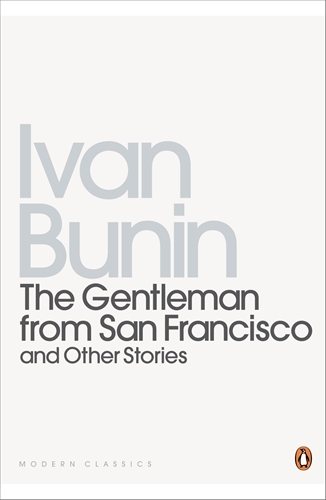
The Gentleman from San Francisco
A much neglected literary figure, Ivan Bunin is one of Russia's major writers and ranks with Tolstoy and Chekhov at the forefront of the Russian Realists. Drawing artistic inspiration from his personal experience, these powerful, evocative stories are set in the late nineteenth- and early twentieth-century Russia of his youth, in the countries that he visited and in France, where he spent the last thirty years of his life. In the title story, for example, a family's tour of fashionable European resorts comes to an unexpected end; 'Late Hour' describes an old man's return to the little Russian town in the steppes that he has not seen since his early youth; while 'Mitya's Love' explores the darker emotional reverberations of sexual experience. Throughout his stories there is a sense of the precariousness of existence, an omnipresent awareness of the impermanence of human aspirations and achievements.
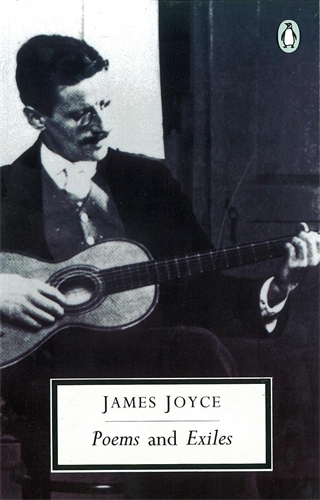
Poems and Exiles
It is only James Joyce's towering genius as a novelist that has led to the comparative neglect of his poetry and sole surviving play. And yet, argues Mays in his stimulating and informative introduction, several of these works not only occupy a pivotal position in Joyce's career; they are also magnificently assured achievements in their own right. Chamber Music is 'an extraordinary début', fusing the styles of the nineties and the Irish Revival with irony and characteristic verbal exuberance. Pomes Penyeach and Exiles (highly acclaimed in Harold Pinter's 1970 staging) were written when Joyce had published Dubliners and was completing A Portrait of the Artist as a Young Man. Both confront painfully personal issues of adultery, jealousy and betrayal and so pave the way for the more detached and fully realized treatment in Ulysses. Joyce's occasional verse includes 'Ecce Puer' for his new-born grandson, juvenilia, satires, translations, limericks and a parody of Samuel Taylor Coleridge. All are brought together in this scholarly, fully annotated yet accessible new edition.
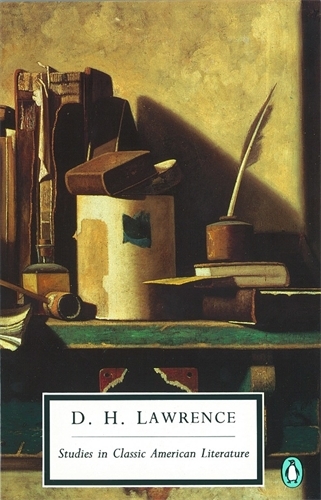
Studies in Classic American Literature
Lawrence asserted that 'the proper function of a critic is to save the tale from the artist who created it'. In these highly individual, penetrating essays he has exposed 'the American whole soul' within some of that continent's major works of literature. In seeking to establish the status of writings by such authors as Poe, Melville, Fenimore Cooper and Whitman, Lawrence himself has created a classic work. Studies in Classic American Literature is valuable not only for the light it sheds on eighteenth- and nineteenth-century American consciousness, telling 'the truth of the day', but also as a prime example of Lawrence's learning, passion and integrity of judgement.
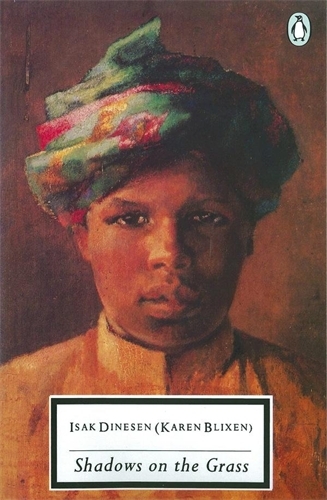
Shadows on the Grass
Isak Dinesen takes up the absorbing story of her life in Kenya begun in the unforgettable Out of Africa, which she published under the name of Karen Blixen. With warmth and humanity these four stories illuminate her love both for the African people, their dignity and traditions, and for the beauty and wildness of the landscape. The first three were written in the 1950s and the last, 'Echoes from the Hills', was written especially for this volume in the summer of 1960 when the author was in her seventies. In all they provide a moving final chapter to her African reminiscences.
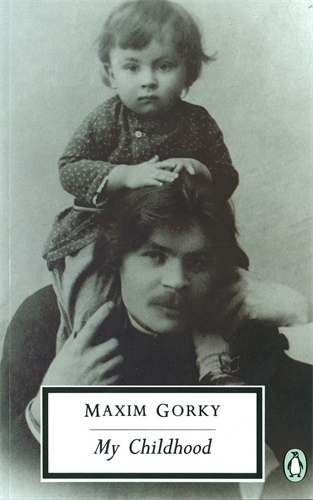
My Childhood
Coloured by poverty and horrifying brutality, Gorky's childhood equipped him to understand - in a way denied to a Tolstoy or a Turgenev - the life of the ordinary Russian. After his father, a paperhanger and upholsterer, died of cholera, five-year-old Gorky was taken to live with his grandfather, a polecat-faced tyrant who would regularly beat him unconscious, and with his grandmother, a tender mountain of a woman and a wonderful storyteller, who would kneel beside their bed (with Gorky inside it pretending to be asleep) and give God her views on the day's happenings, down to the last fascinating details. She was, in fact, Gorky's closest friend and the epic heroine of a book swarming with characters and with the sensations of a curious and often frightened little boy. My Childhood, the first volume of Gorky's autobiographical trilogy, was in part an act of exorcism. It describes a life begun in the raw, remembered with extraordinary charm and poignancy and without bitterness. Of all Gorky's books this is the one that made him 'the father of Russian literature'.
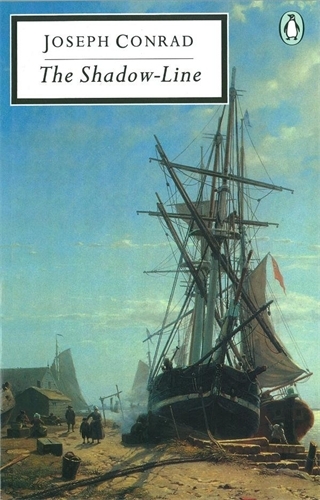
The Shadow-Line
A young and inexperienced sea captain finds that his first command leaves him with a ship stranded in tropical seas and a crew smitten with fever. As he wrestles with his conscience and with the increasing sense of isolation that he experiences, the captain crosses the ‘shadow-line’ between youth and adulthood. In many ways an autobiographical narrative, Conrad's novella was written at the start of the Great War when his son Borys was at the Western Front, and can be seen as an attempt to open humanity’s eyes to the qualities needed to face evil and destruction.
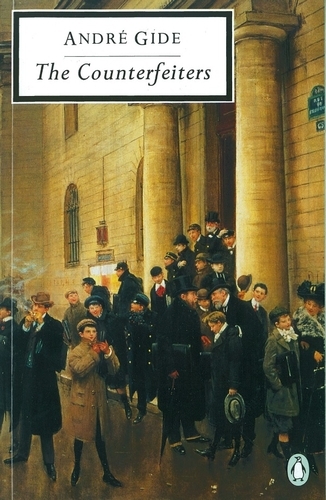
The Counterfeiters
'It's only after our death that we shall really be able to hear' The measured tone of hopeless nihilism that pervades The Counterfeiters quickly shatters any image of André Gide as the querulous and impious Buddha to a quarter-century of intellectuals. In sharp and brilliant prose a seedy, cynical and gratuitously alarming narrative is developed, involving a wide range of otherwise harmless and mainly middle-to-upper-class Parisians. But the setting could be anywhere. From puberty through adolescence to death, The Counterfeiters is a rare encyclopedia of human disorder, weakness and despair.
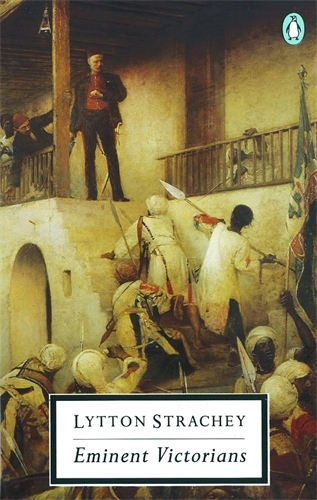
Eminent Victorians
Eminent Victorians marked an epoch in the art of biography; it also helped to crack the old myths of high Victorianism and to usher in a new spirit by which chauvinism, hypocrisy and the stiff upper lip were debunked. In it Strachey cleverly exposes the self-seeking ambitions of Cardinal Manning and the manipulative, neurotic Florence Nightingale; and in his essays on Dr Arnold and General Gordon his quarries are not only his subjects but also the public-school system and the whole structure of nineteenth-century liberal values.
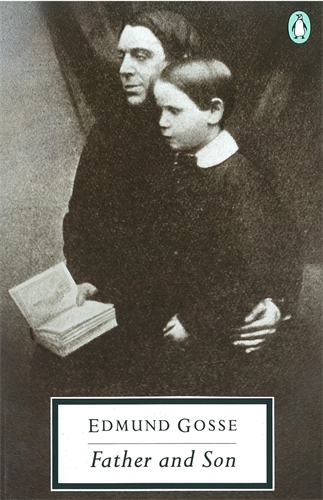
Father and Son
At birth Edmund Gosse was dedicated to 'the Service of the Lord'. His parents were Plymouth Brethren. After his mother's death Gosse was brought up in stifling isolation by his father, a marine biologist whose faith overcame his reason when confronted by Darwin's theory of evolution. Father and Son is also the record of Gosse's struggle to 'fashion his inner life for himself' - a record of whose full and subversive implications the author was unaware, as Peter Abbs notes in his Introduction. First published anonymously in 1907, Father and Son was immediately acclaimed for its courage in flouting the conventions of Victorian autobiography and is still a moving account of self-discovery.
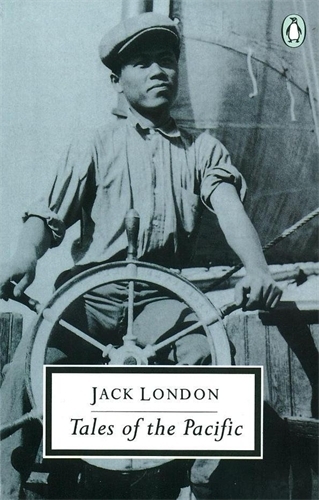
Tales of the Pacific
If you know London primarily through novels like WHITE FANG, these stories will provide a new perspective. Full of intriguing characters and snippets of pidgin, they also highlight London's concern with social issues.
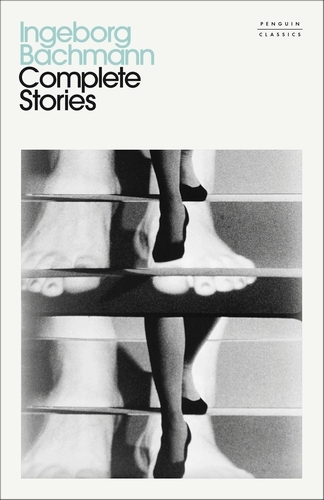
Complete Stories
Where does fascism begin? It doesn’t begin with the first bombs that were dropped. It begins in relationships between people. Fascism lies at the root of the relationship between a man and a woman….
Ingeborg Bachmann’s short fiction – each piece a razor-sharp feminist masterpiece, as urgent as a confession – arrives here in full force. This major collection draws together all the stories Bachmann wrote over her lifetime, many appearing in English for the first time.
These are intensely charged tales of power and submission, obsession and shame, which play out in cliff-side hotels, red-lit bars and court trials in Vienna, Rome and Paris. Bachmann follows lonely lovers through their stifled quarrels and private cruelties, where intimacy becomes a prison, language a weapon, and guilt the very air women breathe. As they struggle to make room for their lives within the narrowing confines of 1950s and 60s society, Bachmann exposes the legacy of fascism, lurking so close to the surface.
An undisputed giant of German-language literature, Bachmann’s ‘vision is so original that the effect is like having a new letter of the alphabet’ (Guardian).
Ingeborg Bachmann’s short fiction – each piece a razor-sharp feminist masterpiece, as urgent as a confession – arrives here in full force. This major collection draws together all the stories Bachmann wrote over her lifetime, many appearing in English for the first time.
These are intensely charged tales of power and submission, obsession and shame, which play out in cliff-side hotels, red-lit bars and court trials in Vienna, Rome and Paris. Bachmann follows lonely lovers through their stifled quarrels and private cruelties, where intimacy becomes a prison, language a weapon, and guilt the very air women breathe. As they struggle to make room for their lives within the narrowing confines of 1950s and 60s society, Bachmann exposes the legacy of fascism, lurking so close to the surface.
An undisputed giant of German-language literature, Bachmann’s ‘vision is so original that the effect is like having a new letter of the alphabet’ (Guardian).
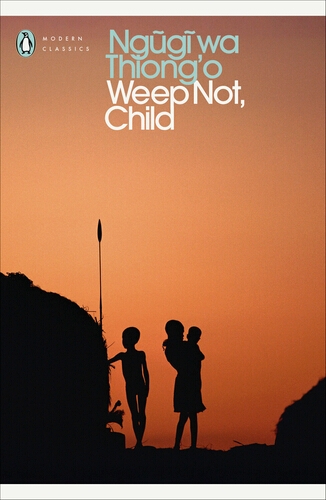
Weep Not, Child
Two small boys stand on a rubbish heap and look into the future. One boy is excited, he is beginning school; the other, his brother, is an apprentice carpenter. Together, they will serve their country – the teacher and the craftsman.
But this is colonial Kenya and times are against them. In the forests, the Mau Mau are waging war against the white government, and the two brothers, Njoroge and Kamau, and the rest of their family, need to decide where their loyalties lie. For the practical man, the choice is simple, but for Njoroge, the scholar, the dream of progress through learning is a hard one to give up.
The debut novel from a giant of African literature, Ngugi wa Thiong'o’s powerful story about the tragic effects of colonialism on the lives of ordinary people continues to resonate strongly today.
But this is colonial Kenya and times are against them. In the forests, the Mau Mau are waging war against the white government, and the two brothers, Njoroge and Kamau, and the rest of their family, need to decide where their loyalties lie. For the practical man, the choice is simple, but for Njoroge, the scholar, the dream of progress through learning is a hard one to give up.
The debut novel from a giant of African literature, Ngugi wa Thiong'o’s powerful story about the tragic effects of colonialism on the lives of ordinary people continues to resonate strongly today.
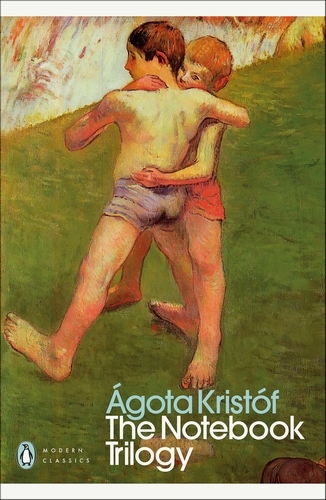
The Notebook Trilogy
Sent to a remote village to live with their grandmother, twins Claus and Lucas devise physical and mental exercises to render themselves invulnerable to the ongoing horrors of war and living under a totalitarian regime. When their bond is tested, their collective ‘we’ shatters and the boys become isolated in different countries. Lucas is challenged to prove his identity and that of his missing brother, a defector to ‘the other side’.
Kristóf’s haunting and unforgettable masterpiece has been an international phenomenon ever since its first publication in French 40 years ago. Distilling the brutally fracturing effects of war and displacement onto identity and memory, and our need for stories in our search for unity and meaning, The Notebook Trilogy is stark fable of timeless relevance.
Kristóf’s haunting and unforgettable masterpiece has been an international phenomenon ever since its first publication in French 40 years ago. Distilling the brutally fracturing effects of war and displacement onto identity and memory, and our need for stories in our search for unity and meaning, The Notebook Trilogy is stark fable of timeless relevance.
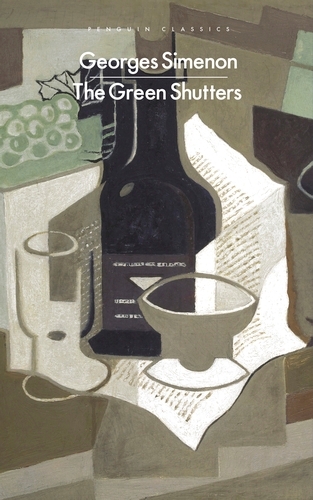
The Green Shutters
Sin and green shutters: both entailed lots of unexpected consequences that weren’t easy to see at first glance . . .
In the autumn years of his illustrious career, ‘The Great’ Emile Maugin, a celebrated actor, receives devastating news: he does not have long left to live. Hounded by rage, alcoholism and the memories of his fractured childhood in the Vendée marshes, he haunts the stage doors and dimly-lit bars of pre-war Paris. Yet, faintly visible on the horizon of his mind, stands a white house with green shutters and manicured lawns, whose inhabitants lead the ‘normal life’ that lies just beyond Maugin’s reach.
First published in 1950, The Green Shutters cuts to the depths of the human soul and asks: what is left to us when time runs out?
In the autumn years of his illustrious career, ‘The Great’ Emile Maugin, a celebrated actor, receives devastating news: he does not have long left to live. Hounded by rage, alcoholism and the memories of his fractured childhood in the Vendée marshes, he haunts the stage doors and dimly-lit bars of pre-war Paris. Yet, faintly visible on the horizon of his mind, stands a white house with green shutters and manicured lawns, whose inhabitants lead the ‘normal life’ that lies just beyond Maugin’s reach.
First published in 1950, The Green Shutters cuts to the depths of the human soul and asks: what is left to us when time runs out?

Penguin Modern Classics bundle
Choose three Penguin Modern Classics for only £21 over on the Penguin Shop.